
 English
 Français
 Deutsch
 Italiano
 Português




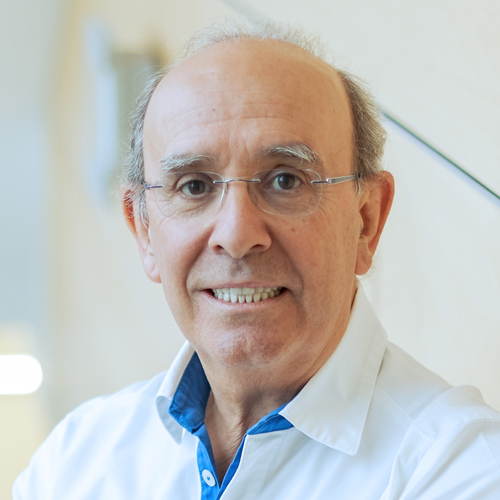
Eduardo Anitua
Doctor en Medicina y Cirugía. Especialista en Estomatología
Director del Instituto Eduardo Anitua, Instituto de investigación básica y aplicada y Centro clínico y de formación en Implantología oral y Terapia regenerativa. Director científico de BTI (Biotechnology Institute).
Cursos que imparte
-
![Experto en Terapias Biológicas Aplicadas a la Medicina Regenerativa [2026-2027]](https://www.btitrainingcenter.com/wp-content/uploads/2021/08/TC_DEUSTO-REGENERA-2026-500x300.png "Experto en Terapias Biológicas Aplicadas a la Medicina Regenerativa [2026-2027]")
- Eduardo Anitua
- Aintzane Torre
- Mohammad H. Alkhraisat
- Borja de la Sen Corcuera
- Francisco Muruzabal del Castillo
- Sabino Padilla
- Laura Piñas
- Ricardo Tejero
- Ramón Cugat
- Mikel Sánchez Álvarez
- Francisco Angulo Rivera
- Bruno Ardanza Trevijano
- Juan Azofra
- Ana Ballester Torregrosa
- Nicolás Fiz Sánchez
- Yosu Franco Iriarte
- Víctor Galán
- Ander García Etxeberria
- Cristina García Millán
- Ane Garmendia Madariaga
- Xavier Gasol Santa
- Jorge Guadilla Aisuaga
- Natalia Jiménez Gómez
- Álex Martínez
- Jesús Merayo Lloves
- Jaime Oraa Apraiz
- Ana Cristina Riestra
- Francisco Rodríguez Cuadrado
- Alberto Sánchez
- Ronald Sánchez Ávila
- Roberto Seijas Vázquez
- Víctor Vaquerizo
- Fernando Yangüela Rodilla
- Abraham Zavala García
Experto en Terapias Biológicas Aplicadas a la Medicina Regenerativa [2026-2027]
06/11/2026Mixto

![Roncopatía y apnea obstructiva del sueño [febrero 2027]](https://www.btitrainingcenter.com/wp-content/uploads/2021/08/TC_APNEA-BASICO-2026-500x300.jpg "Roncopatía y apnea obstructiva del sueño [febrero 2027]")
Artículos publicados
- Autor:
- Eduardo Anitua
- Mohammad H. Alkhraisat
- Reparaz I
Plasma rich in growth factors as a treatment for ocular fundus diseases: Mapping current applications and future directions
Biomed Pharmacother. 2025 Oct:191:118440. Posterior segment diseases are a leading cause of irreversible blindness and remain challenging to treat with current therapies. Blood-derived products have emerged as promising regenerative tools due to their anti-inflammatory, neuroprotective, and regenerative properties. This review synthesizes evidence from 46 clinical studies published between 2019 and 2025, covering 1253 patients and 1570 eyes treated with platelet-rich derivatives for ocular fundus diseases. The most frequent indications were structural defects (59 %), inherited retinal dystrophies (11 %), optic neuropathies (11 %), age-related macular degeneration (7 %), and vascular dysfunctions (5 %). These therapies were administered via various routes, including intravitreal, subtenon, suprachoroidal, and subretinal injections, as well as eye drops and fibrin membranes.
- Autor:
- Eduardo Anitua
- Alvarado-Villacorta R
- Merayo-Lloves J
- Sánchez-Ávila RM
- Alfonso-Bartolozzi B
- Lisa C
- Fernández-Vega-Cueto L
- Alfonso JF
Real-World Outcomes of Allogeneic Immunosafe Plasma Rich in Growth Factors Eye Drops for Refractory Ocular Surface Diseases: A Prospective Observational Study
Ophthalmol Ther. 2025 Sep;14(9):2253-2281. Immunosafe plasma rich in growth factors eye drops (is-ePRGF) have shown anti-inflammatory and regenerative effects on ocular surface diseases (OSD). However, medical or technical issues may preclude some patients from undergoing autologous blood extraction. We aimed to evaluate the safety and clinical outcomes of allogeneic is-ePRGF therapy for refractory OSD in real-world practice.
- Autor:
- Eduardo Anitua
- Mohammad H. Alkhraisat
- Fuente M
Long term stability of preservative-free and lyophilized PRGF eye drops stored at different temperature conditions: in vitro comparative study
Cryobiology. 2025 Jun;119:105214. Long-term stability of blood-derived eye drops is required to adapt the use of this treatment to prolonged clinical treatments and more green pharmacy. This study has been designed to assess the long-term storage life of freeze-dried plasma rich in growth factors (PRGF) eye drops, maintaining their biological content and activity. Thus, blood from five healthy donors was extracted and centrifuged for obtaining PRGF. The obtained PRGF eye-drops after platelet activation were freeze-stored or were lyophilized and then stored for 18 and 24 months at room temperature (RT) or at + 5 °C. Growth factor content and proliferative potential of PRGF eye drops on primary human keratocytes (HK) was evaluated at each storage time and condition.
- Autor:
- Eduardo Anitua
- Vázquez-Sebrango G
- Macía I
- Arganda-Carreras I.
The role of artificial intelligence in implant dentistry: a systematic review
Int J Oral Maxillofac Surg. 2025 May 28:S0901-5027(25)00118-3. The aim of this systematic review was to comprehensively analyse recent studies on the application of artificial intelligence (AI) in dental implantology. The PRISMA guidelines were followed. Five databases were accessed: Scopus, Web of Science, MEDLINE/PubMed, IEEE Xplore, and JSTOR. Documents published between 2018 and October 15, 2024 relating to AI and implantology were considered. Exclusions encompassed reviews, opinion articles, books, conference references, studies using AI as a supplementary method, AI for teaching implant dentistry, and AI for implant fabrication, prothesis, or design. A total of 120 relevant papers were included. Risk of bias was assessed using PROBAST.
- Autor:
- Eduardo Anitua
- Ricardo Tejero
- Armentia M
- Fernández-de-Gobeo I
- Saracho L.
Detection of the initial gap at different implant-abutment connections
J Prosthet Dent. 2025 May;133(5):1325.e1-1325.e8. The seal at the implant-abutment connection (IAC) is crucial for ensuring implant-prosthetic function and reducing the risk of peri-implant diseases. An accurate determination of the first IAC gap under realistic dynamic-loading conditions is needed to investigate current and future IAC designs.

Vídeos disponibles en BTI Channel
Además de esta pequeña muestra en BTI Channel podrás ampliar tus conocimientos en implantología oral, medicina regenerativa y apnea del sueño.

