
 Español
 English
 Deutsch
 Italiano
 Português





- Auteur:
- Eduardo Anitua
- Gorka Orive
- Sanchez-Avila RM
- Merayo-Lloves J
- Riestra AC
- Berisa S
- Lisa C
- Sánchez JA
- Muruzabal F
Plasma rich in growth factors membrane as coadjuvant treatment in the surgery of ocular surface disorders
Medicine (Baltimore). 2018 Apr;97(17):e0242. To evaluate the safety and efficacy of the surgical use of plasma rich in growth factors fibrin membrane (mPRGF) in different ocular surface pathologies.Fifteen patients with different corneal and conjunctival diseases were included in the study. Patients were grouped according to the use of mPRGF as graft (corneal and/or conjunctival) or dressing; they were also grouped according to the surgical subgroup of intervention (persistent corneal ulcer [PCU], keratoplasty, superficial keratectomy, corneal perforation, and pterygium).
- Auteur:
- Eduardo Anitua
- Gorka Orive
- Riestra AC
- Vazquez N
- Chacon M
- Berisa S
- Sanchez-Avila RM
- Meana A
- Merayo-Lloves J
Autologous method for ex vivo expansion of human limbal epithelial progenitor cells based on plasma rich in growth factors technology
Ocul Surf. 2017 Apr;15(2):248-256. Develop an autologous culture method for ex vivo expansion of human limbal epithelial progenitor cells (LEPCs) using Plasma Rich in Growth Factors (PRGF) as a growth supplement and as a scaffold for the culture of LEPCs.
- Auteur:
- Eduardo Anitua
- Piñas L
- Alkhraisat MH
- Fernández RS
Biological Therapy of Refractory Ulcerative Oral Lichen Planus with Plasma Rich in Growth Factors
Am J Clin Dermatol. 2017 Jun;18(3):429-433.
- Auteur:
- Riestra AC
- Alonso-Herreros JM
- Merayo-Lloves J
Platelet rich plasma in ocular surface
Arch Soc Esp Oftalmol. 2016 Oct;91(10):475-90. The use of platelet-rich preparations has experienced a significant increase in recent years due to its role in tissue-repair and regeneration. The aim of this study is to examine the available evidence regarding the application of plasma rich in growth factors, and its variations, on the ocular surface. A review is also presented on the effects of platelet-derived growth factors, the implications of the preparation methods, and the existing literature on the safety and efficacy of these therapies in ocular surface diseases. Despite the widespread use of platelet preparations there is no consensus on the most appropriate preparation method, and growth factors concentration vary with different systems. These preparations have been used in the treatment of ocular surface diseases, such as dry eye or persistent epithelial defects, among others, with good safety and efficacy profiles, but further studies are needed to compare to the currently available alternatives.
- Auteur:
- Eduardo Anitua
- Gorka Orive
- Muruzabal F
- de la Fuente M
- Merayo J
- Durán J
Plasma Rich in Growth Factors for the Treatment of Ocular Surface Diseases
Curr Eye Res. 2016 Jul;41(7):875-82. The purpose of this work is to describe and review the technology of plasma rich in growth factors (PRGF), a novel blood derivative product, in the treatment of ocular surface disorders.
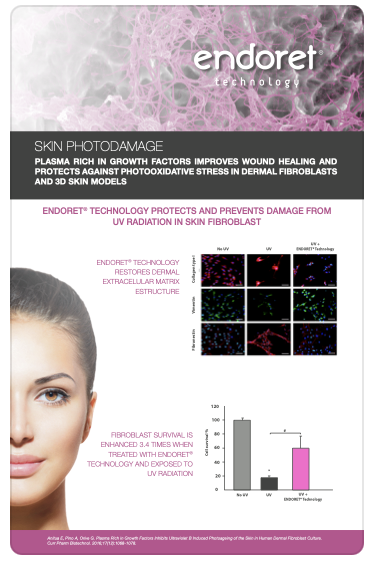
Plasma Rich in Growth Factors Inhibits Ultraviolet B Induced Photoageing of the Skin in Human Dermal Fibroblast Culture
Curr Pharm Biotechnol. 2016;17(12):1068-1078 Ultraviolet irradiation is able to deeply penetrate into the dermis and alter fibroblast structure and function, leading to a degradation of the dermal extracellular matrix.
- Auteur:
- Eduardo Anitua
- Gorka Orive
- Ander Pino
- M. R. Navarro
- M. Asín
- M. A. Martínez
- A. M. Martínez
- C. Molina
- L. Moscoso
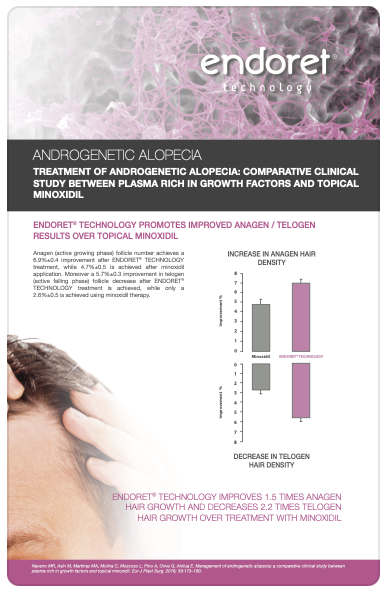
Management of androgenetic alopecia: a comparative clinical study between plasma rich in growth factors and topical minoxidil
Eur J Plast Surg 39, 173–180 (2016). Androgenetic alopecia (AGA) is a common hair disorder. Finasteride and minoxidil have been approved by the Food and Drug Administration (FDA) for the treatment of AGA. However, some side effects have been related to the intake of these drugs. Recently, plasma rich in growth factors has emerged as a safe alternative for the management of pattern hair loss. The purposes of the present study are to evaluate and compare the efficacy and safety of plasma rich in growth factors (PRGFs) versus topical minoxidil treatment in AGA-affected patients.
- Auteur:
- Eduardo Anitua
- Gorka Orive
- Muruzabal F
- Tayebba A
- Riestra A
- Perez VL
- Merayo-Lloves J
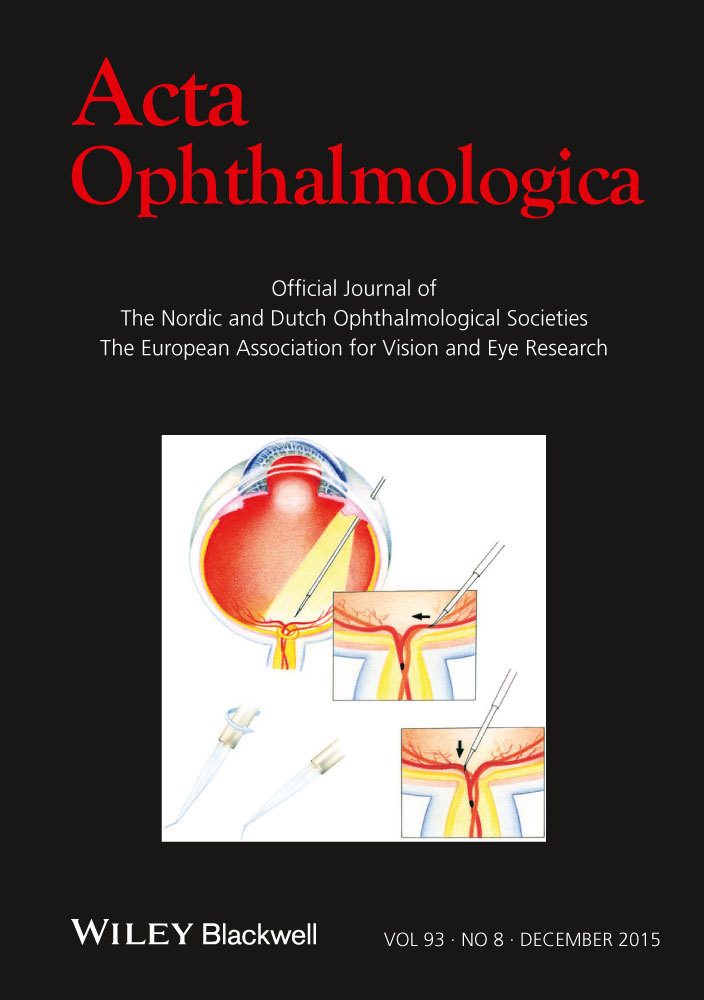
Autologous serum and plasma rich in growth factors in ophthalmology: preclinical and clinical studies
Acta Ophthalmol. 2015 Dec;93(8):e605-14. The use of blood derivatives represents an alternative therapeutic approach that is gaining interest in regenerative medicine due to its potential to stimulate and accelerate tissue healing. Autologous serum eye drops and platelet-enriched plasma eye drops are being used in the treatment of different ophthalmological disorders. In this review, we summarize the different blood-derived formulations used in the treatment and care of ocular surface disorders. The biological basis and use of autologous serum and plasma rich in growth factors are deeply evaluated as well as the challenges to be addressed in the future in this new generation of blood-derived therapies.
- Auteur:
- Eduardo Anitua
- Gorka Orive
- Prado R
Closing regulatory gaps: new ground rules for platelet-rich plasma
Trends Biotechnol. 2015 Sep;33(9):492-5. The Spanish Agency of Medicines and Medical Devices (AEMPS) has drawn up a comprehensive report and resolution that regulates for the first time the use of platelet-rich plasma (PRP) as a human-use medicinal product. This regulatory framework offers emerging challenges to adapt the use of PRP to the new requirements of safety and efficacy. The heterogeneity of the different products can hinder their regulation, which today differs substantially in the different worldwide regulatory frameworks.
- Auteur:
- Eduardo Anitua
- Gorka Orive
- Mar Zalduendo
- María Troya
- Sabino Padilla
Leukocyte inclusion within a platelet rich plasma-derived fibrin scaffold stimulates a more pro-inflammatory environment and alters fibrin properties
PLoS One. 2015 Mar 30;10(3):e0121713. One of the main differences among platelet-rich plasma (PRP) products is the inclusion of leukocytes that may affect the biological efficacy of these autologous preparations. The purpose of this study was to evaluate whether the addition of leukocytes modified the morphological, biomechanical and biological properties of PRP under normal and inflammatory conditions.