 Español
 Français
 Deutsch
 Italiano
 Português




- Author:
- Eduardo Anitua
- Gorka Orive
- Sánchez M
- Fiz N
- Azofra J
- Usabiaga J
- Aduriz Recalde E
- Garcia Gutierrez A
- Albillos J
- Gárate R
- Aguirre JJ
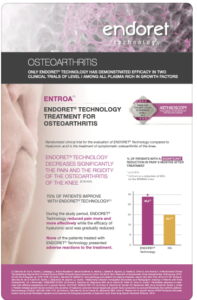
A randomized clinical trial evaluating plasma rich in growth factors (PRGF-Endoret) versus hyaluronic acid in the short-term treatment of symptomatic knee osteoarthritis
Abstract
Purpose: This multicenter, double-blind clinical trial evaluated and compared the efficacy and safety of PRGF-Endoret (BTI Biotechnology Institute, Vitoria-Gasteiz, Spain), an autologous biological therapy for regenerative purposes, versus hyaluronic acid (HA) as a short-term treatment for knee pain from osteoarthritis.
Methods: We randomly assigned 176 patients with symptomatic knee osteoarthritis to receive infiltrations with PRGF-Endoret or with HA (3 injections on a weekly basis). The primary outcome measure was a 50% decrease in knee pain from baseline to week 24. As secondary outcomes, we also assessed pain, stiffness, and physical function using the Western Ontario and McMaster Universities Osteoarthritis Index; the rate of response using the criteria of the Outcome Measures for Rheumatology Committee and Osteoarthritis Research Society International Standing Committee for Clinical Trials Response Criteria Initiative (OMERACT-OARSI); and safety.
Results: The mean age of the patients was 59.8 years, and 52% were women. Compared with the rate of response to HA, the rate of response to PRGF-Endoret was 14.1 percentage points higher (95% confidence interval, 0.5 to 27.6; P = .044). Regarding the secondary outcome measures, the rate of response to PRGF-Endoret was higher in all cases, although no significant differences were reached. Adverse events were mild and evenly distributed between the groups.
Conclusions: Plasma rich in growth factors showed superior short-term results when compared with HA in a randomized controlled trial, with a comparable safety profile, in alleviating symptoms of mild to moderate osteoarthritis of the knee.
Level of evidence: Level I, randomized controlled multicenter trial.