
 Español
 English
 Français
 Deutsch
 Italiano



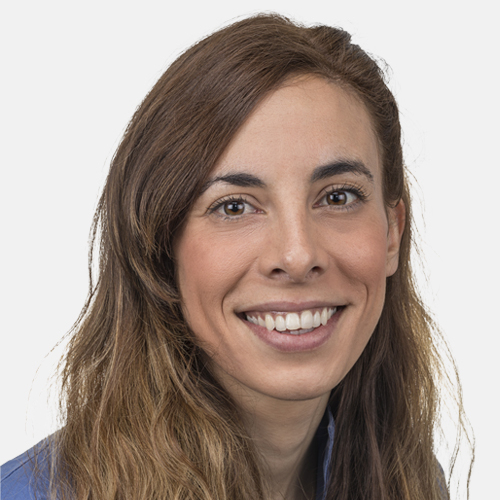
Gabriela Zubimendi
Psicólogo da Saúde Especialista em Medicina do Comportamento do Sono (ESRS)
Psicóloga e técnica do sono na Unidade Multidisciplinar de Distúrbios do Sono da Clínica Dentária Anitua.
Artigos publicados
- Autor:
- Eduardo Anitua
- Gabriela Zubimendi
- Valls-Ontañón A
- Giralt-Hernando M
- Mazarro-Campos A
- Hernández-Alfaro F.
Does orthognathic surgery have an incidentally beneficial effect on mild or asymptomatic sleep apnoea?
Int J Oral Maxillofac Surg. 2023 Dec;52(12):1255-1261. A prospective study was performed to assess the effect of orthognathic surgery on mild obstructive sleep apnoea (OSA) in patients with an underlying dentofacial deformity treated for occlusal and/or aesthetic reasons. As the main outcome variables, changes in upper airway volume and apnoea-hypopnoea index (AHI) were evaluated at 1 and 12 months of follow-up, in patients undergoing orthognathic surgery with widening movements of the maxillomandibular complex. Descriptive, bivariate, and correlation analyses were performed; significance was set at P < 0.05. Eighteen patients diagnosed with mild OSA were enroled (mean age 39.8 ± 10.0 years). An overall upper airway volume widening of 46.7% after orthognathic surgery was observed at 12 months of follow-up.
- Autor:
- Eduardo Anitua
- Gabriela Zubimendi
- Flores C
- Durán-Cantolla J
- Alkhraisat MH.
Frequency of Obstructive Sleep Apnea in Patients Presenting with Tooth Fractures: A Prospective Controlled Study
Int J Periodontics Restorative Dent. 2023 Jan-Feb;43(1):121-127. Several factors in the pathophysiology of obstructive sleep apnea (OSA) may increase the likelihood of excessive occlusal loads. Increased occlusal loads may compromise a tooth's mechanical resistance. This prospective controlled study assessed the frequency of OSA in patients presenting with tooth fracture. Patients with and without tooth fractures were selected in a consecutive manner from a private dental clinic between February 2018 and January 2020. Demographic and dental variables were registered. A parafunctional habits questionnaire, anthropometric measurements, and validated respiratory polygraphy were performed. Descriptive, comparative, and correlation statistical analyses were performed. Multiple regression analysis was also performed. Fifty-nine patients were included, and 29 presented tooth fracture.