 Español
 English
 Deutsch
 Italiano
 Português




- Auteur:
- Eduardo Anitua
- Fullaondo A
- Zalduendo M
- Osinalde N
- Alkhraisat MH
- Zubiaga AM.
Impact of increasingly complex cell culture conditions on the proteome of human periodontal ligament stem cells
Abstract
Aims: Human periodontal ligament stem cells (hPDLSCs) exhibit an enormous potential to regenerate periodontal tissue. However, their translatability to the clinical setting is constrained by technical difficulties in standardizing culture conditions. The aim was to assess complex culture conditions using a proteomic-based protocol to standardize multi-layer hPDLSC cultivation methodology.
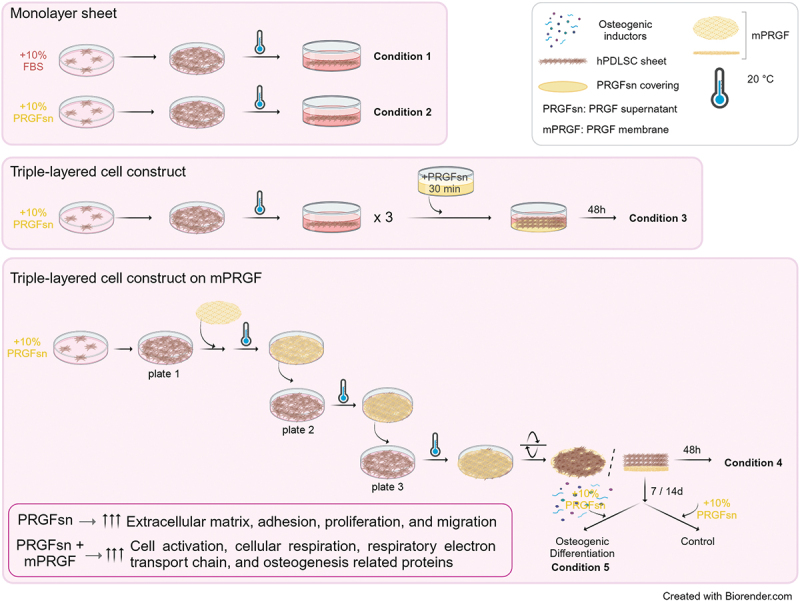
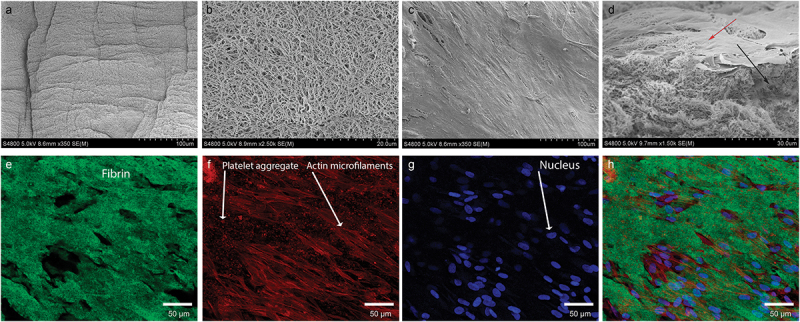
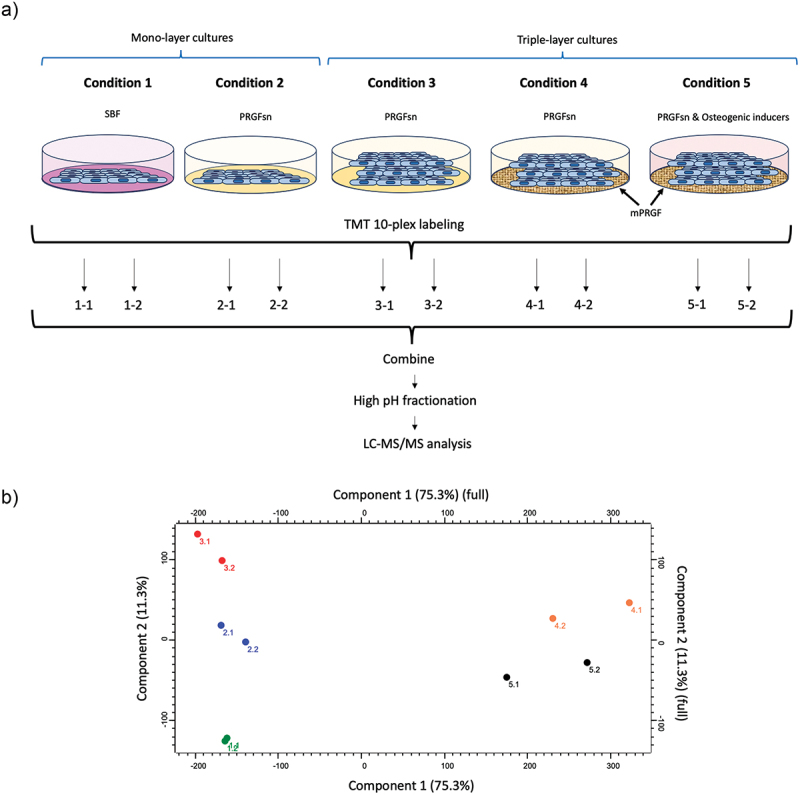
Materials and methods: hPDLSC-derived constructs were created with varying biological complexity. The simplest constructs were monolayer sheets of hPDLSCs cultured with fetal bovine serum (FBS) or Plasma Rich in Growth Factors supernatant (PRGFsn). The most complex constructs were triple-layered cell structures cultured with PRGFsn, with or without PRGF fibrin membrane (mPRGF). Ultrastructure and proteomic analyses were performed on these constructs.
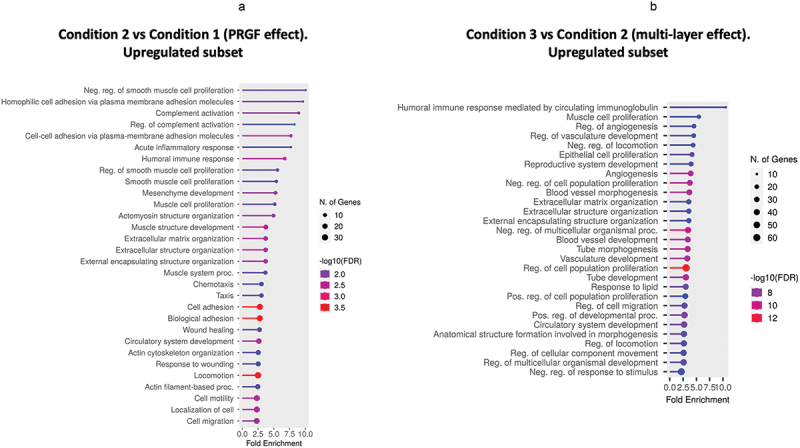
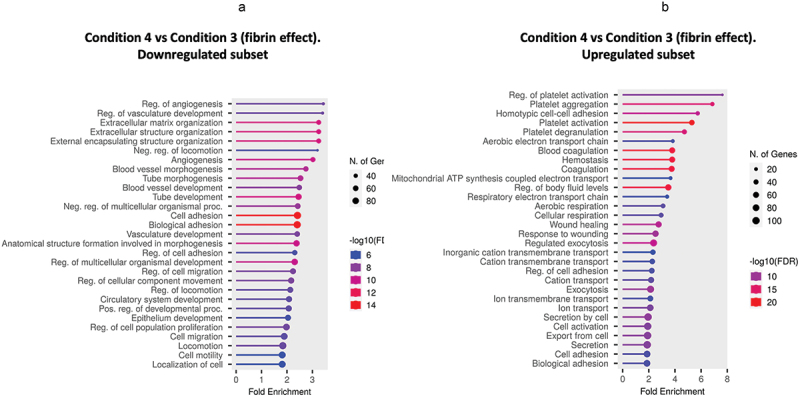
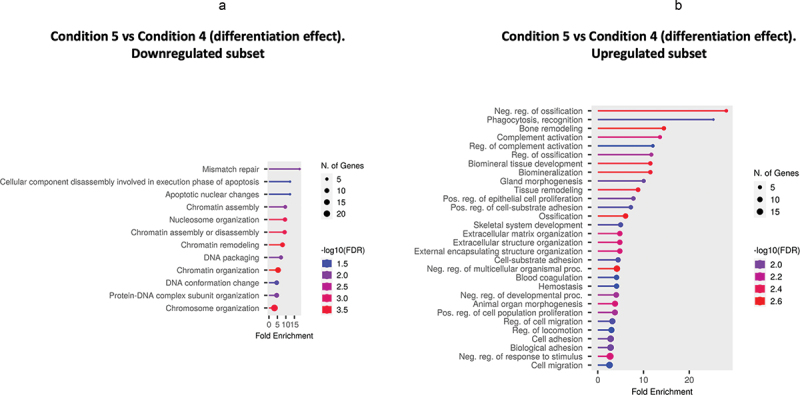
Results: PRGF supernatant improved protein expression related to extracellular matrix, adhesion, proliferation, and migration in hPDLSCs. PRGF fibrin scaffold upregulates proteins for cell activation, respiration, and electron transport. hPDLSCs on fibrin membrane show robust osteogenic potential through differential protein expression (ossification, tissue remodeling, morphogenesis, or cell migration) and overall homeostasis relative to less complex structures.
Conclusions: Our data reveal the far-reaching potential of 3-dimensional constructs in combination with PRGF technology in periodontal regenerative applications.
Keywords: Human periodontal ligament stem cells; cell sheet technology; osteogenic differentiation; plasma rich in growth factors; proteome; triple-layered cell constructs.
Figures