
 Español
 English
 Français
 Italiano
 Português



- Autor:
- Eduardo Anitua
- Ricardo Tejero
- Murias-Freijo A
- Tierno R
- Alkhraisat MH
Assessing peri-implant bacterial community structure: the effect of microbiome sample collection method
BMC Oral Health. 2024 Aug 26;24(1):1001. Oral microbiota comprises polymicrobial communities shaped by mutualistic coevolution with the host, contributing to homeostasis and regulating immune function. Nevertheless, dysbiosis of oral bacterial communities is associated with a number of clinical symptoms that ranges from infections to oral cancer. Peri-implant diseases are biofilm-associated inflammatory conditions affecting the soft and hard tissues around dental implants. Characterization and identification of the biofilm community are essential for the understanding of the pathophysiology of such diseases. For that sampling methods should be representative of the biofilm communities Therefore, there is a need to know the effect of different sampling strategies on the biofilm characterization by next generation sequencing.

- Autor:
- Eduardo Anitua
- Asier Eguia
- Alkhraisat MH
Clinical Performance of Implant-Supported Prostheses in the Rehabilitation of Patients Previously Treated for Medication-Related Osteonecrosis of the Jaws (MRONJ): A Systematic Review
Cureus. 2024 Jun 4;16(6):e61658 There is a lack of consensus on managing resultant bone and soft tissue defects or on restoring oral function and aesthetics following medication-related osteonecrosis of the jaws (MRONJ) lesion healing. This clinical challenge presents a dilemma for practitioners. Removable prostheses pose a recurrence risk if poorly fitted and may inadequately restore function or aesthetics in cases of significant bone defect. Dental implant-supported prostheses could enhance function and quality of life, though their risks and indications are not well-defined. This systematic review examines the clinical outcomes and complications associated with implant-supported rehabilitations post-MRONJ surgery. This study was conducted following the Preferred Reporting Items for Systematic Reviews and Meta-Analyses (PRISMA) statement recommendations and it was pre-registered in the Prospective Register of Systematic Reviews (PROSPERO) (CRD42023492539).
- Autor:
- Eduardo Anitua
- Ricardo Tejero
- Romero Gavilán F
- Cerqueira A
- Muñoz F
- García Arnáez I
- Azkargorta M
- Elortza F
- Gurruchaga M
- Goñi I
- Suay J
Enhancing the correlation between in vitro and in vivo experiments in dental implant osseointegration: investigating the role of Ca ions
J Mater Chem B. 2024 Mar 13;12(11):2831-2842 This study delves into the osteogenic potential of a calcium-ion modified titanium implant surface, unicCa, employing state-of-the-art proteomics techniques both in vitro (utilizing osteoblasts and macrophage cell cultures) and in vivo (in a rabbit condyle model).
- Autor:
- Eduardo Anitua
- Asier Eguia
- Staudigl C
- Alkhraisat MH
Clinical performance of additively manufactured subperiosteal implants: a systematic review
Int J Implant Dent. 2024 Feb 5;10(1):4 The aim of this study was to assess implant survival and complications rate of modern subperiosteal implants (CAD designed and additively manufactured).
- Autor:
- Eduardo Anitua
- Gómez-González C
- González-Mosquera A
- Alkhraisat MH
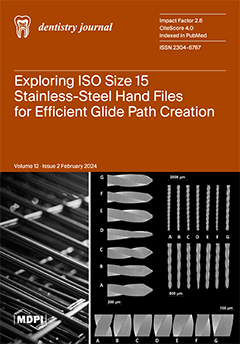
Mouth Breathing and Its Impact on Atypical Swallowing: A Systematic Review and Meta-Analysis
Dent J (Basel). 2024 Jan 23;12(2):21. The aim of this systematic review is the assessment of the effect of mouth breathing on the prevalence of tongue thrust. The review was performed according to the PRISMA 2020 checklist guidelines, and the protocol was registered with PROSPERO (CRD42022339527).
![[5.5 mm implant. A solution for severe atrophies without sacrificing predictability]](https://www.btitrainingcenter.com/wp-content/uploads/2023/12/cover_issue_81_es_ES.jpg)
- Autor:
- Eduardo Anitua
[5.5 mm implant. A solution for severe atrophies without sacrificing predictability]
Rev Cient Odontol (Lima). 2023 Dec 26;10(4):e137. The rehabilitation of areas of the maxilla and mandible with extreme resorption is a fact of increased presence in our dental practice. Surgical techniques such as short and extra-short implants facilitate the resolution of these clinical cases. In this clinical case report we develop a case rehabilitated using a 5.5 mm long implant and we provide a biomechanical study of the behaviour of implants with these characteristics.
- Autor:
- Eduardo Anitua
- Asier Eguia
- Alkhraisat MH
Extra-short implants (≤ 6.5 mm in length) in atrophic and non-atrophic sites to support screw-retained full-arch restoration: a retrospective clinical study
Int J Implant Dent. 2023 Sep 13;9(1):29. Increasing scientific evidence support extending the application of short dental implants to non-atrophic dental arches. The purpose of this study has been the evaluation of extra-short implants (≤ 6.5 mm in length) that were placed in atrophic and non-atrophic anatomical sites to support the same prosthesis.
- Autor:
- Eduardo Anitua
- Flores C
- Fernández-de-Retana S
- Anitua B
- Alkhraisat MH.
Performance of Immediately Loaded Short Implants Using Low-Speed Drilling Protocol and Plasma Rich in Growth Factors: A Controlled Retrospective Observational Study
Int J Periodontics Restorative Dent. 2023 May;43(2):232-239b. Short dental implants are an alternative to surgical bone augmentation procedures and the placement of longer implants. The high predictability of short implants has encouraged clinicians to load them immediately. However, there are few studies assessing the influence of immediate vs delayed loading of short (< 8 mm) implants. The purpose of this retrospective study was to report the mid-term (5-year) outcomes (survival and marginal bone loss [MBL]) of immediate vs delayed loading of short implants. A total of 44 patients with 149 short implants fulfilled the inclusion criteria (95 and 54 implants with delayed and immediate loading, respectively).
- Autor:
- Eduardo Anitua
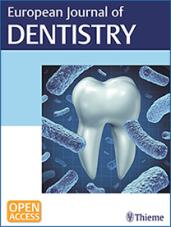
Two-Step Progressive Transcrestal Sinus Augmentation Using a 4.5 mm Unloaded Implant as a “Temporary Implant” in Highly Atrophic Ridge: Case Report
Eur J Dent. 2023 May;17(2):560-566. Severe atrophic posterior maxillary ridge (residual bone height < 3 mm) could be a challenging situation to place dental implants. Several treatment options have been proposed, but some of them may require advanced surgical skills to achieve best results. In this article, we present a novel and easier technique to allow implant placing in localized areas of severe atrophy. In a first step, a 4.5-length extra-short (unloaded) implant is placed after a transcrestal maxillary sinus floor augmentation (MSFA). After the gained apical bone consolidation, this "temporary implant" is atraumatically removed and a longer and wider definitive implant is placed to support the definitive single restoration. The case of a 45-year-old female treated with this approach is also presented. The patient suffered a severe resorption in the upper right molar area after a tooth extraction.

- Autor:
- Eduardo Anitua
- Asier Eguia
- Alkhraisat MH
On Peri-Implant Bone Loss Theories: Trying To Piece Together the Jigsaw
Cureus. 2023 Jan 1;15(1):e33237. This review aims to explore the plausibility of new theories on the etiopathogenesis of marginal bone loss (MBL) and peri-implantitis (PI) and to discuss possible underlying pathogenic mechanisms. The former concept of osteointegration of dental implants can now be conceptualized as a foreign body response histologically characterized by a bony demarcation in combination with chronic inflammation. Different risk factors can provoke additional inflammation and, therefore, pro-inflammatory cytokine release in soft tissues and bone, leading to an overpass of the threshold of peri-implant bone defensive and regenerative capacity.